How to Grow on Spotify in 2026: A Data-Driven Strategy for Artists
The most effective way to grow on Spotify in 2026 is by combining data analysis, consistent releases, and playlisting strategies.
Artists who understand their metrics and act on them are far more likely to increase streams, reach new listeners, and trigger algorithmic growth.
Why Most Artists Don’t Grow on Spotify
Uploading music is easy. Growing is not. The main reason artists struggle is because they rely on guesswork instead of data.
Without understanding key performance signals, artists cannot scale:
- What’s working
- Who is listening
- Why a track is performing
- How to replicate success
Spotify growth is not random — it becomes predictable when you use data correctly.
How the Spotify Algorithm Actually Works
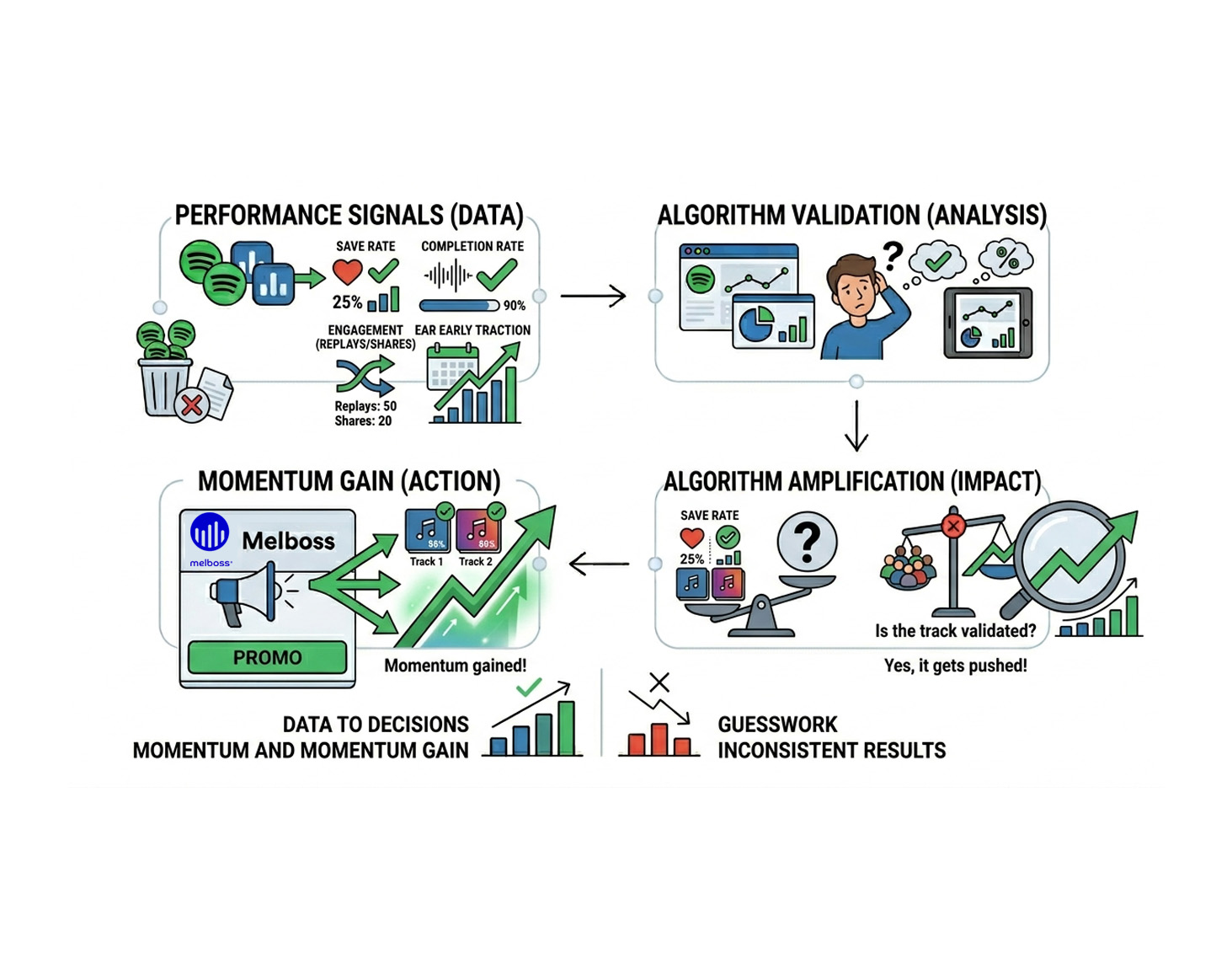
Spotify promotes songs based on performance signals, not guesswork.
- Save rate
- Completion rate
- Engagement (replays, shares)
- Early traction after release
When a track performs well, it gets pushed to more listeners and gains momentum.
The 3 Pillars of Spotify Growth
Sustainable growth on Spotify is built on three core elements:
Data (Understanding Performance)
Before you can grow, you need to understand what’s happening with your music.
- Track streams, listeners, and engagement
- Analyze save rate and audience data
- Identify performance trends early
If you don’t measure it, you can’t improve it.
Learn more about Spotify analytics here: /spotify-growth-analysis
Strategy (Turning Data Into Action)
Data alone doesn’t create growth — decisions do.
- Release music consistently
- Focus on your best-performing tracks
- Adapt based on real performance
Artists who grow fastest are those who iterate quickly.
Playlisting (Scaling Exposure)
Once a track shows strong signals, playlisting becomes the main growth lever.
- Increase streams
- Reach new audiences
- Trigger algorithmic recommendations
Playlists amplify what is already working.
Learn how playlisting works: /spotify-playlisting
The Spotify Growth Framework (Step-by-Step)
Follow this structured process to grow consistently:
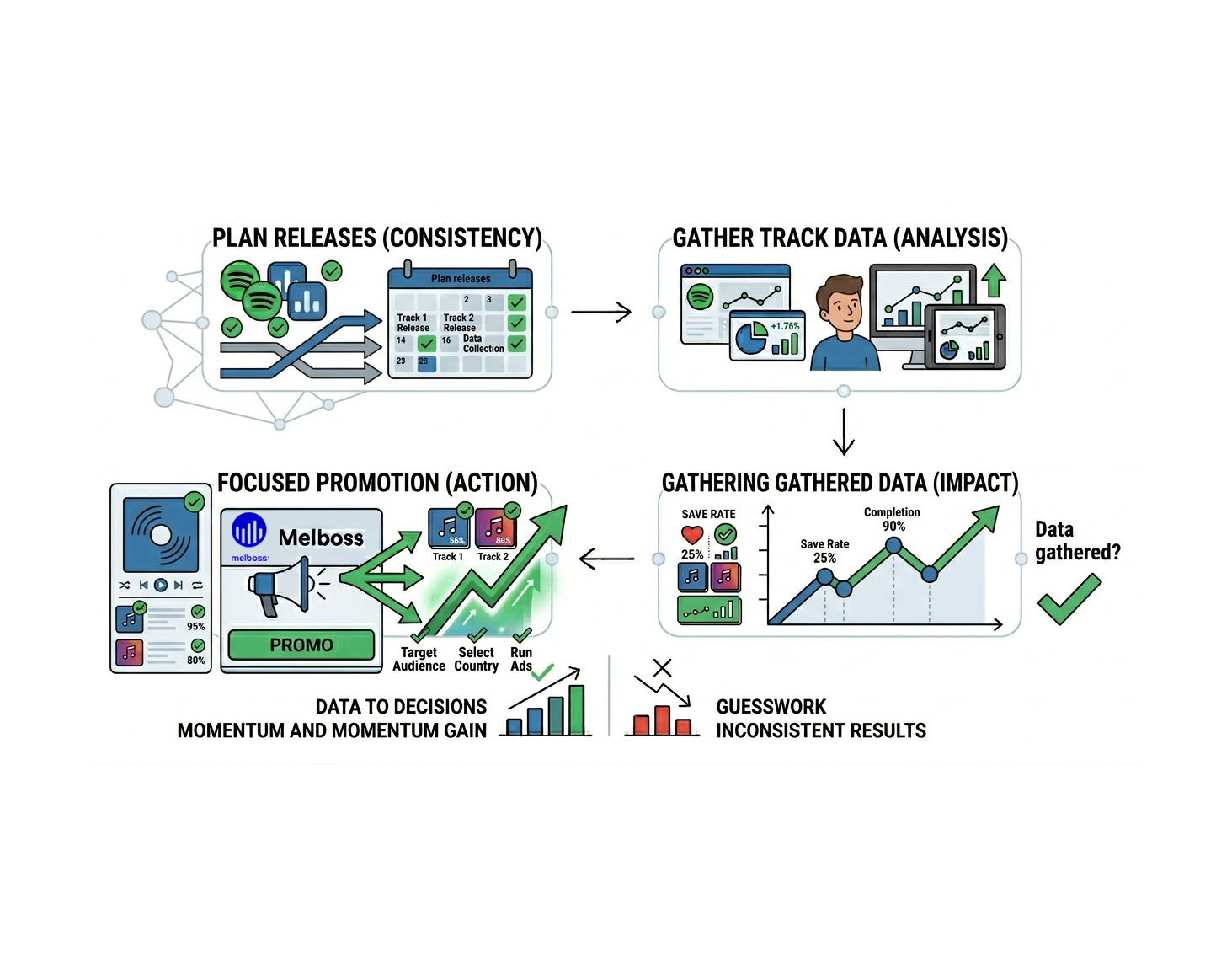
Step 1: Release Strategically
Avoid random releases and focus on consistency.
- Plan your releases
- Give each track time to gather data
- Focus on quality over quantity
Step 2: Track Performance Early
The first 7–14 days are critical for understanding performance.
- Monitor listener growth
- Analyze save rate
- Track engagement signals
Step 3: Identify Winning Tracks
Not every song will perform equally — focus on the strongest ones.
- High save rate
- Consistent listener growth
- Repeat engagement
Step 4: Push What Works
Once you find a strong track, scale it.
- Invest in promotion
- Push it to playlists
- Amplify on social media
Step 5: Repeat the Process
Growth on Spotify is iterative, not viral.
- Test new releases
- Learn from data
- Optimize continuously
Where Most Artists Get It Wrong
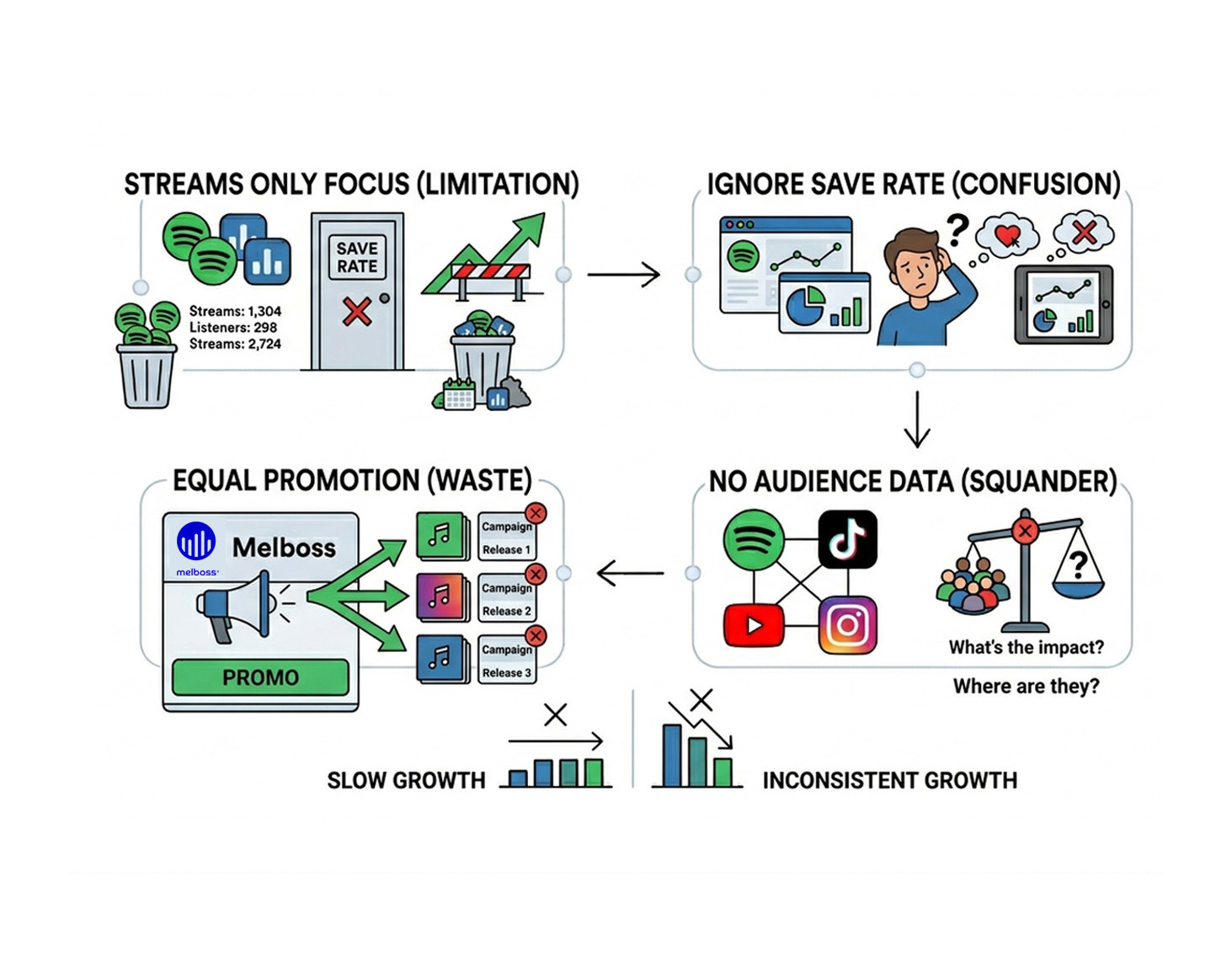
Common mistakes that limit growth:
- Focusing only on streams
- Ignoring save rate
- Not tracking audience data
- Promoting every release equally
- Not using data to guide decisions
These mistakes lead to slow or inconsistent growth.
The Missing Piece: Turning Data Into Decisions
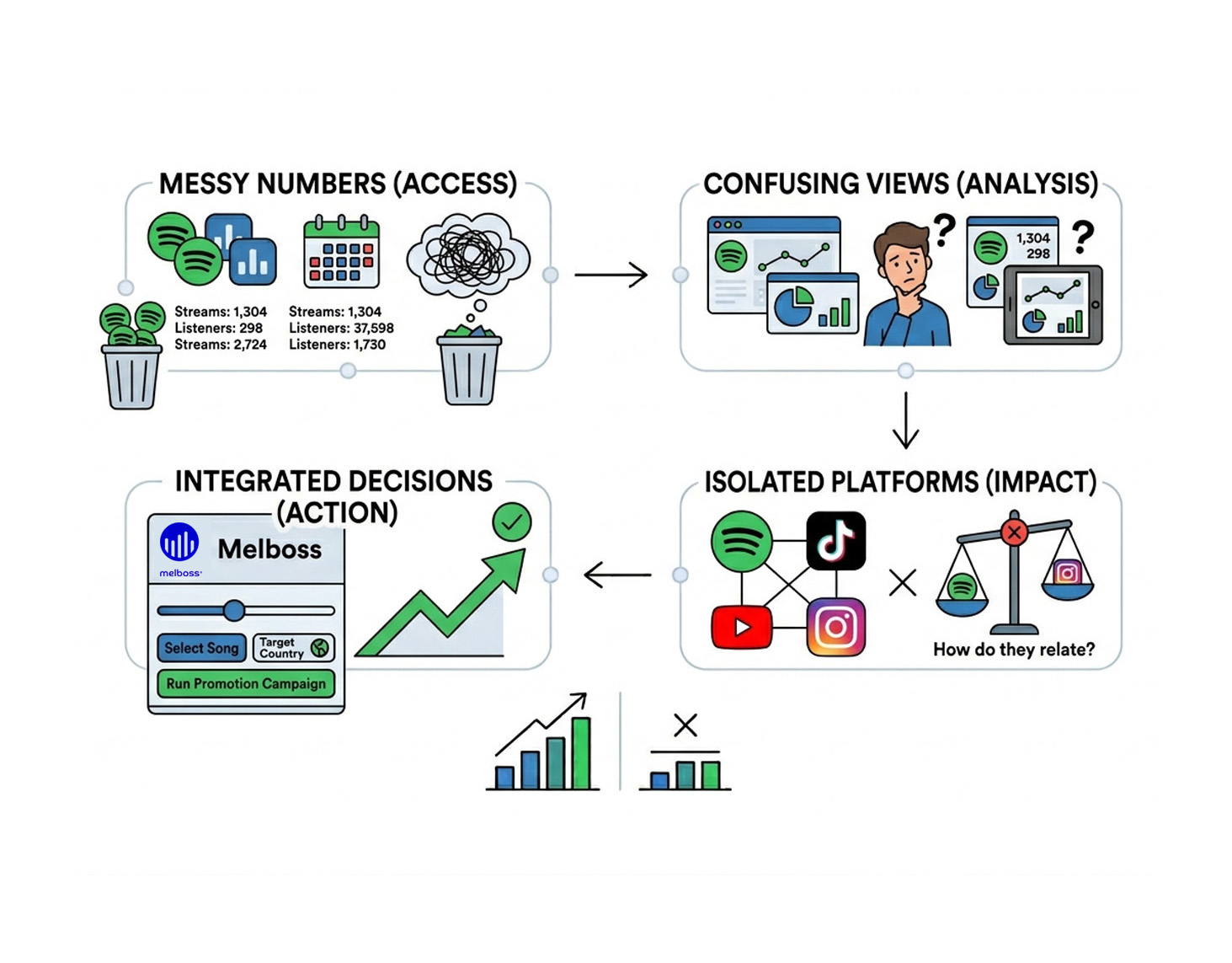
Most artists have access to data, but don’t know how to use it effectively.
- Which songs to push
- Where growth is coming from
- How platforms impact performance
- What actions to take next
Spotify shows numbers, but not decisions.
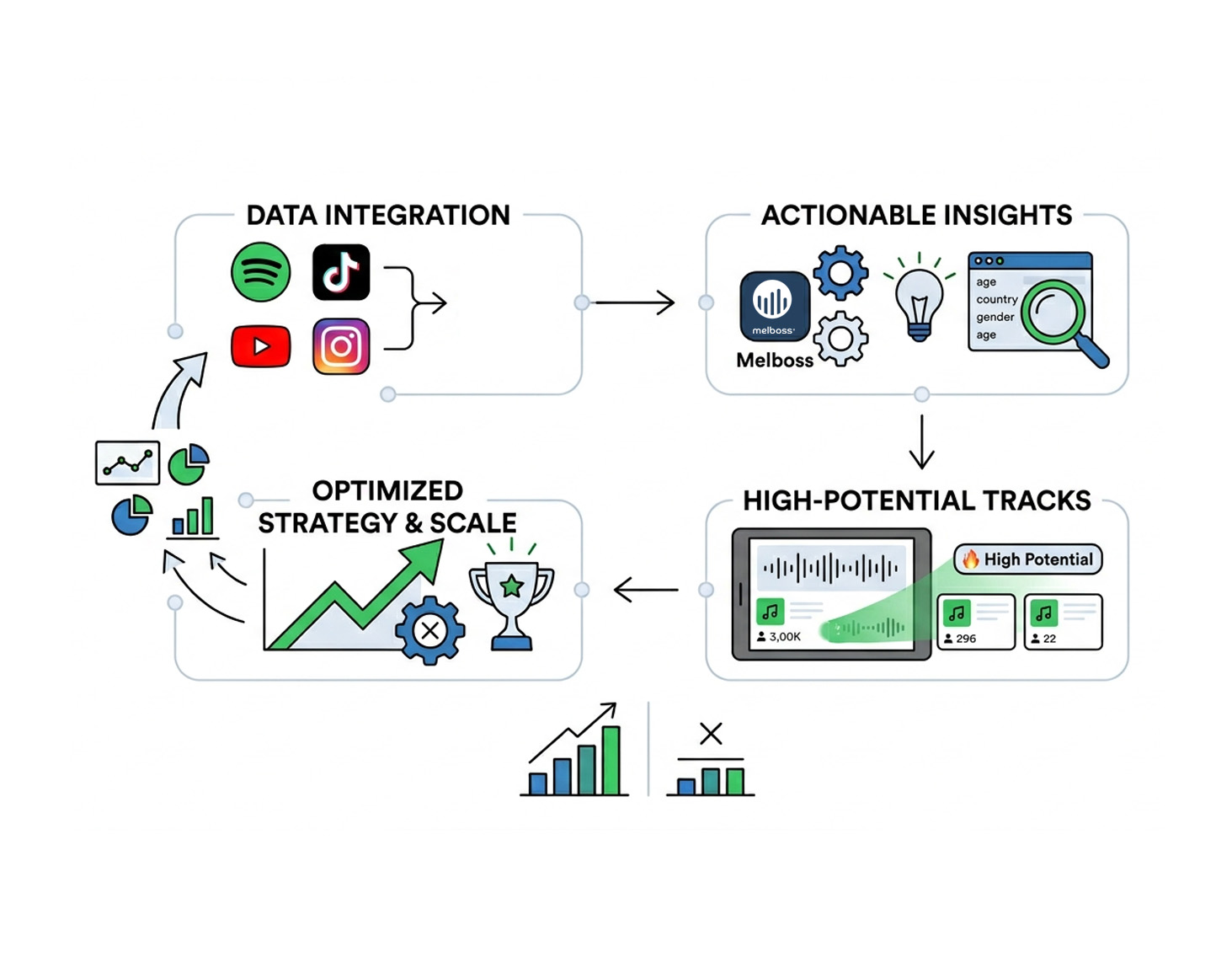
How Melboss Helps You Grow Faster
Melboss turns fragmented data into actionable insights.
- Track Spotify performance in real time
- Understand your audience (age, country, gender)
- Connect TikTok, YouTube, and Instagram data
- Identify high-potential tracks
- Make better release and promotion decisions
This allows you to move faster and scale what works.
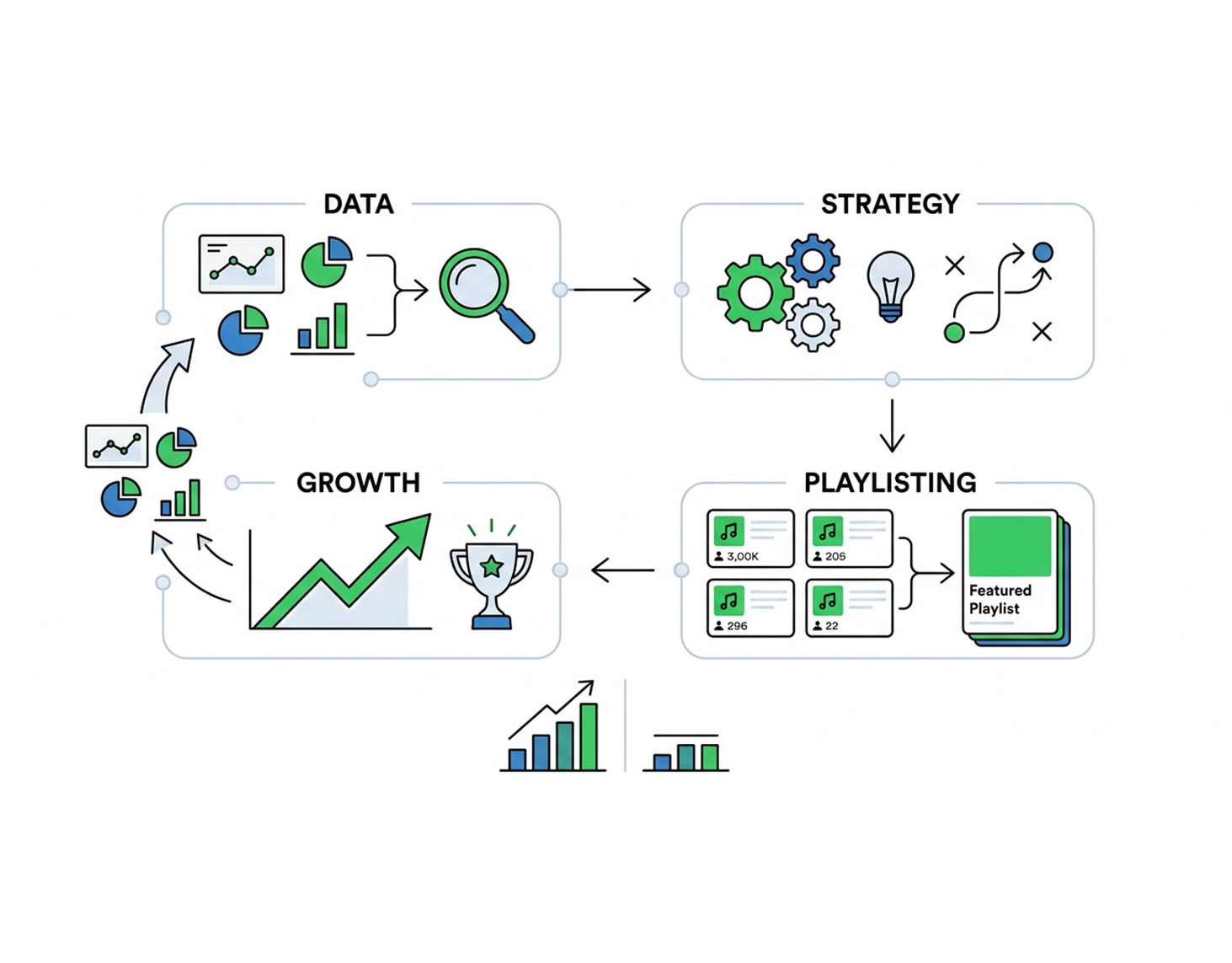
The Spotify Growth Loop
Spotify growth follows a repeatable system:
Data → Strategy → Playlisting → Growth
- Data reveals what works
- Strategy amplifies it
- Playlisting scales it
- Growth generates new data
This loop is what separates growing artists from stagnant ones.
How long does it take to grow on Spotify?
With consistent releases and strong data signals, artists can see measurable growth within a few months.
What is the most important factor for Spotify growth?
Engagement metrics like save rate and listener retention are key drivers of algorithmic visibility.
Do playlists guarantee growth?
No, but they significantly increase exposure and can trigger algorithmic momentum.
Can I grow without data tools?
Yes, but it is much slower. Data-driven decisions dramatically improve results.
How can I turn Spotify data into a growth strategy?
Analyzing data is only the first step. To grow consistently, you need to translate insights into clear actions. Platforms like Melboss help artists turn their Spotify data into structured release and promotion strategies.
Is there a tool that helps manage Spotify growth?
Yes, tools like Melboss are designed to help artists track performance, understand their audience, and build data-driven release strategies more efficiently.
Your Music Business, Our Trusted Clients
We work with artists, labels, managers, promoters and publishers.
Final Takeaway
Spotify growth is not about luck — it’s about understanding your data and acting on it consistently.
Track the right metrics. Identify what works. Scale strategically.
If you want to grow faster, reach more listeners, and get playlisted, you need a system — not guesswork.