Key 2025 Streaming Royalty Trends & Payouts
Top Payout Platforms (Per Stream)
- Napster: ~$0.019–$0.021
- Tidal: ~$0.012–$0.015
- Apple Music: ~$0.006–$0.01
- Spotify: ~$0.003–$0.005
- YouTube Music: ~$0.001–$0.002
Major Platform Performance
- Spotify: Paid a record $11 billion+ in 2025, bringing total payments over 20 years to nearly $70 billion. More than 13,800 artists generated at least $100,000 in royalties on the platform.
- Apple Music: Continued to offer higher per-stream rates than Spotify, largely due to a predominantly paid subscription base.
- Social/Video: TikTok and Meta (Instagram/Facebook) payouts are generally based on the number of videos a song is featured in rather than total video views.
Market Dynamics & Factors
- Independence: Independent artists and labels continued to account for half of all royalties paid by Spotify.
- Growth Concerns: Despite high total payouts, US streaming revenue growth slowed to less than 1% YoY in H1 2025.
- Thresholds: Platforms like Spotify solidified requirements for a minimum of 1,000 annual streams to trigger royalty payments.
- Regional Differences: Payouts vary significantly based on user location and premium vs. ad-supported tiers.
Songwriting vs. Master Royalties
- Songwriting and publishing royalties are paid separately, with 2025 data indicating that for 1 million streams, platforms paid significantly less than the total gross payout (e.g., ~$460 for songwriters on Spotify for 1M streams, compared to higher master recording payouts).
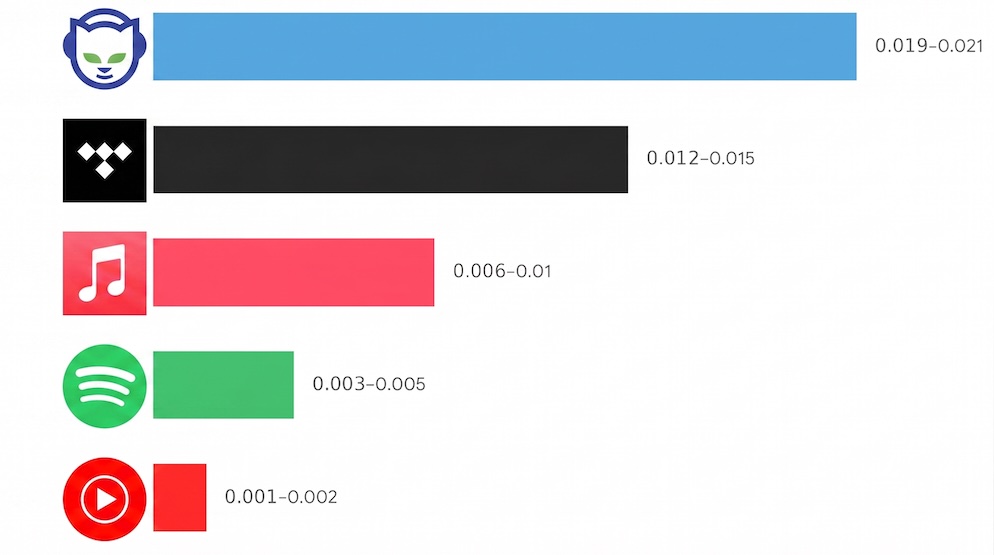
Source: Napster, Tidal, Apple Music payout data (estimates)
How are streaming royalties calculated?
Streaming royalties are calculated based on the number of streams, the platform’s payout rate, and factors such as listener location, subscription type, and revenue pools. Each platform uses its own formula, so payouts can vary significantly.
How much does Spotify pay per stream?
Spotify typically pays between $0.003 and $0.004 per stream, but the exact amount depends on factors like user location, premium vs free listeners, and total platform revenue.
Which platform pays the most per stream?
Platforms like Apple Music and Deezer generally offer higher per-stream payouts compared to Spotify or YouTube Music, but total earnings depend on audience size and engagement.
Why do royalty rates change?
Royalty rates change due to factors like subscription pricing, advertising revenue, regional differences, and updates to platform payout models. This means earnings per stream are not fixed.
Are these royalty estimates accurate?
This calculator provides estimated earnings based on average payout rates. Actual royalties may vary depending on distribution deals, listener geography, and platform-specific factors.
Do artists receive 100% of streaming royalties?
No. Royalties are typically split between rights holders such as labels, distributors, publishers, and artists. The final amount an artist receives depends on their agreements.
How many streams do I need to make a living?
It depends on your revenue per stream and income goals. For example, earning $1,000 per month may require hundreds of thousands to millions of streams, depending on the platforms.
Can I increase my streaming revenue?
Yes. You can increase revenue by growing your audience, improving listener engagement, targeting high-value markets, and diversifying across multiple streaming platforms.
Your Music Business, Our Trusted Clients
We work with artists, labels, managers, promoters and publishers.
Final Thoughts on Streaming Royalties
Streaming royalties can be a significant source of income for artists, but they are influenced by many factors. Understanding how royalties work and using tools like this calculator can help you set realistic expectations and make informed decisions about your music career.
If you want to increase your earnings, grow your audience, and optimize every release, you need more than estimates. You need a system.
With Melboss, you can monitor your streaming performance in real time and use the Smart Music Plan to turn your data into a clear and actionable growth strategy for every release.

 Spotify
 Apple Music
 YouTube Music
 Amazon Music
 Pandora
 Deezer
 Tidal
Tidal