How to Build a Spotify Release Strategy That Actually Grows Your Audience (2026 Guide)
Most artists release music without a plan. Here’s how to structure your releases for consistent growth.
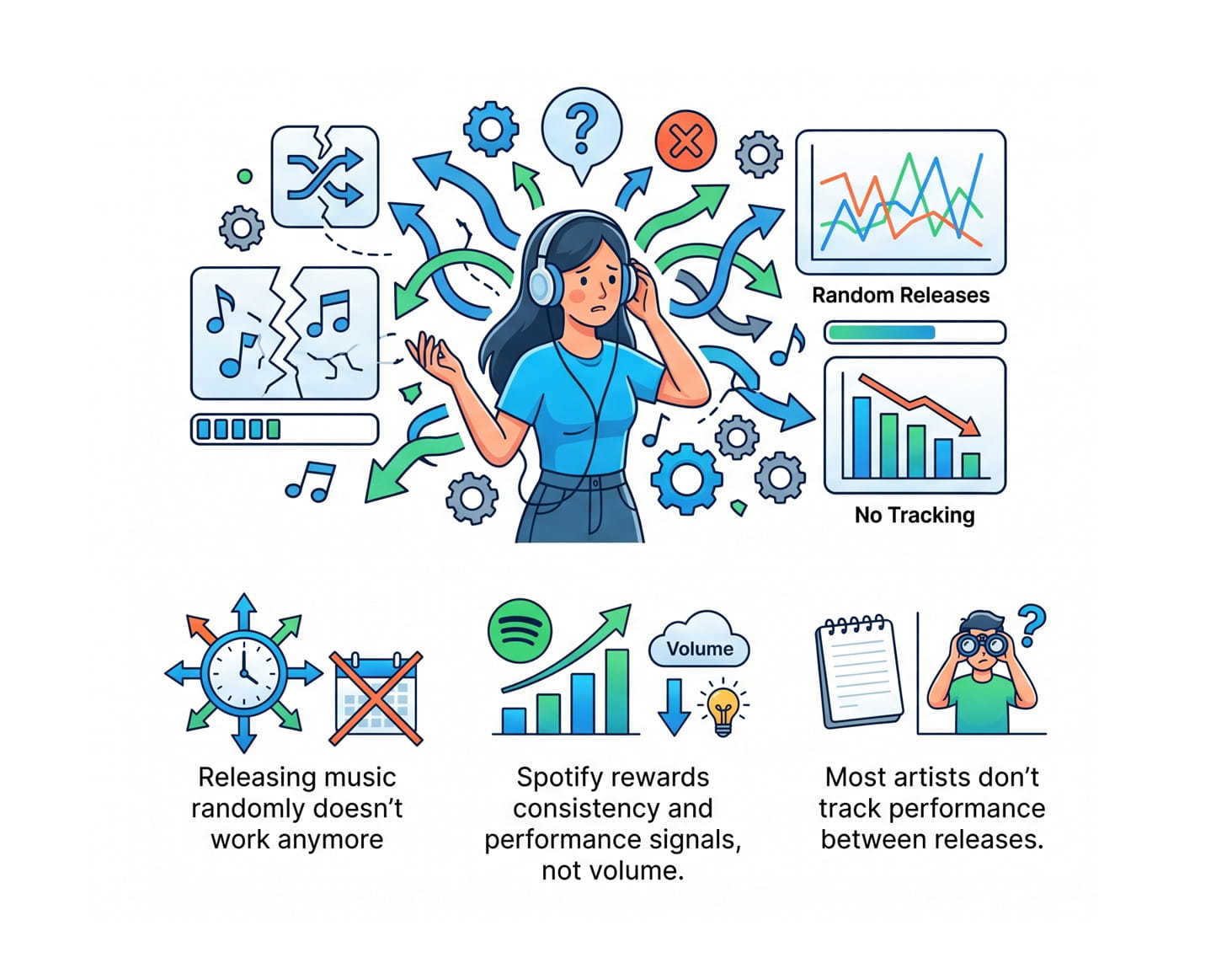
Why Most Release Strategies Fail
- Releasing music randomly doesn’t work anymore
- Spotify rewards consistency and performance signals, not volume
- Most artists don’t track performance between releases
You’re not failing at music — you’re missing a system.
What a Spotify Release Strategy Actually Is
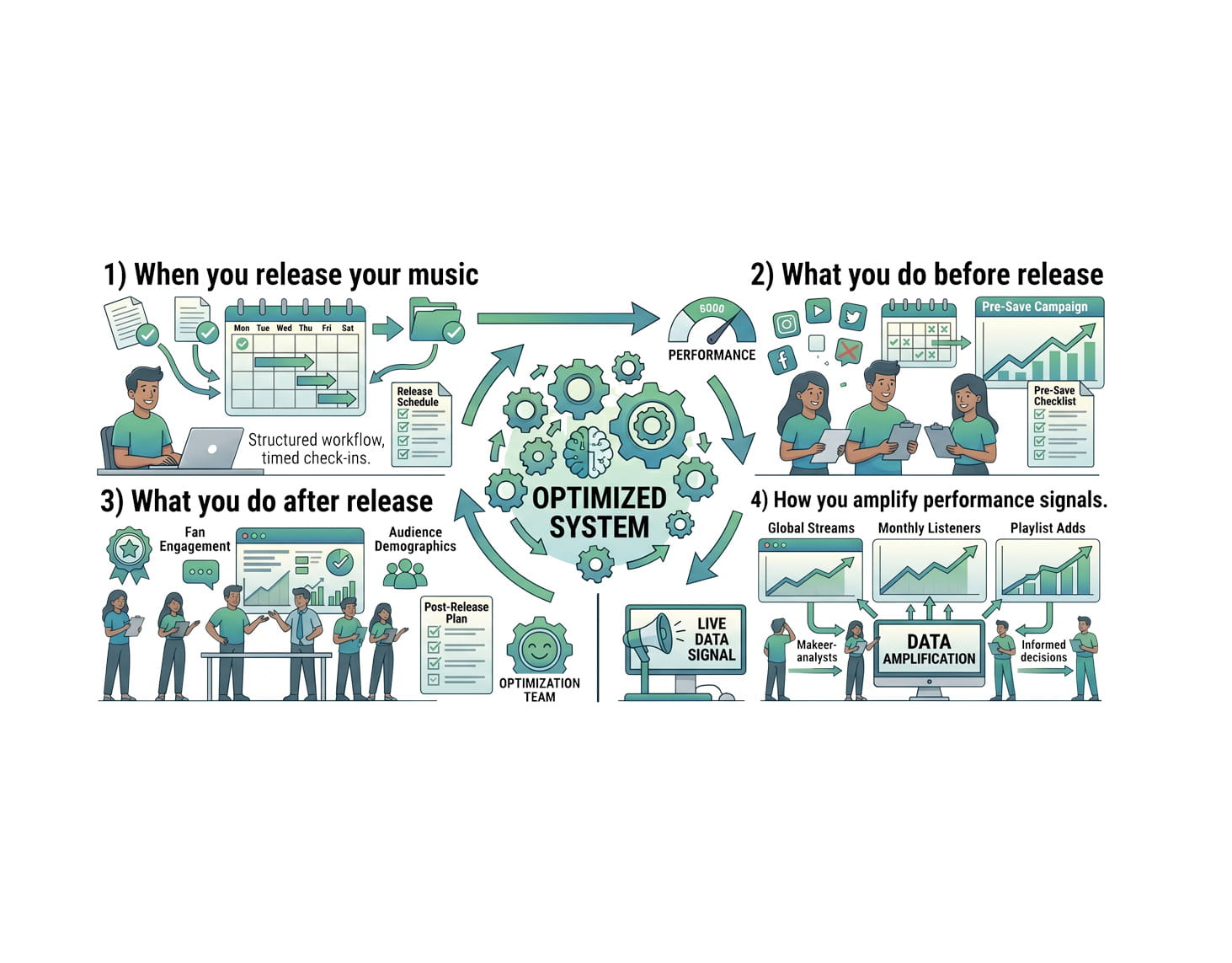
A Spotify release strategy is a structured approach that defines what you do before, during, and after a release to maximize growth.
- When you release your music
- What you do before release
- What you do after release
- How you amplify performance signals
The 3-Phase Release Model
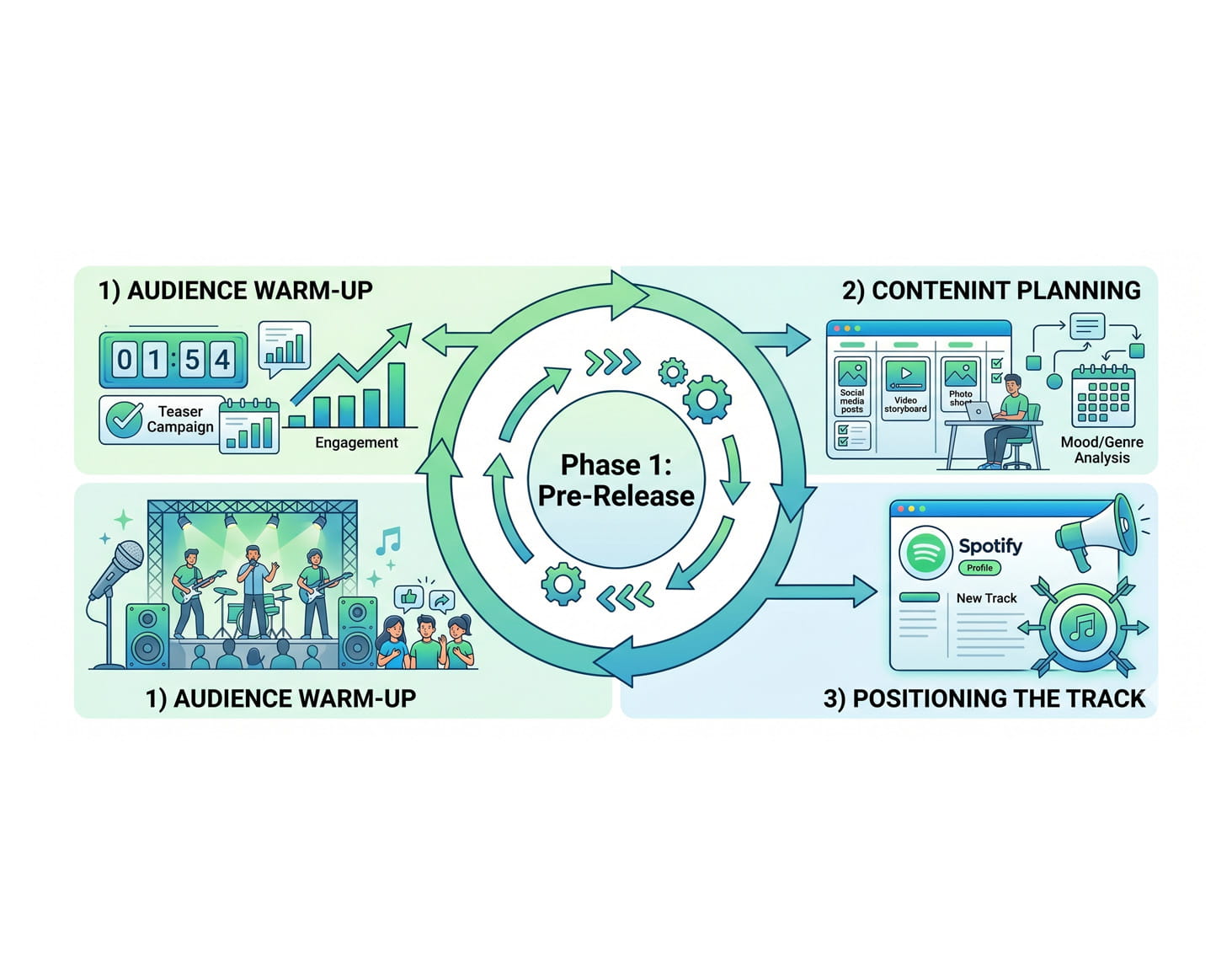
Before Release
- Audience warm-up
- Content planning
- Positioning the track
Launch Phase
- Initial push strategy
- Engagement signals optimization
- Playlist submission
Post-Release
- Analyze performance data
- Double down on winning tracks
- Iterate and improve strategy
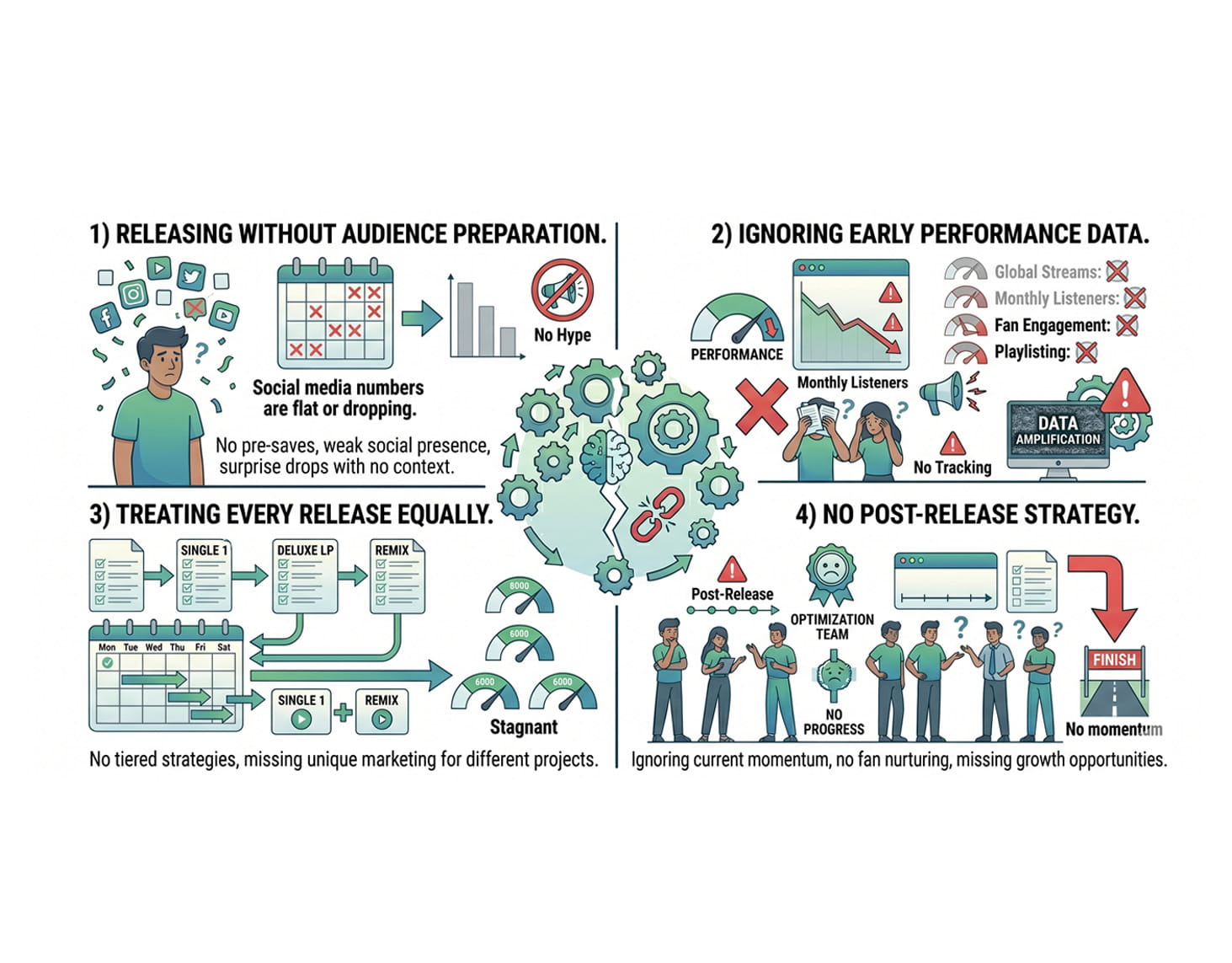
Common Mistakes Artists Make
- Releasing without audience preparation
- Ignoring early performance data
- Treating every release equally
- No post-release strategy
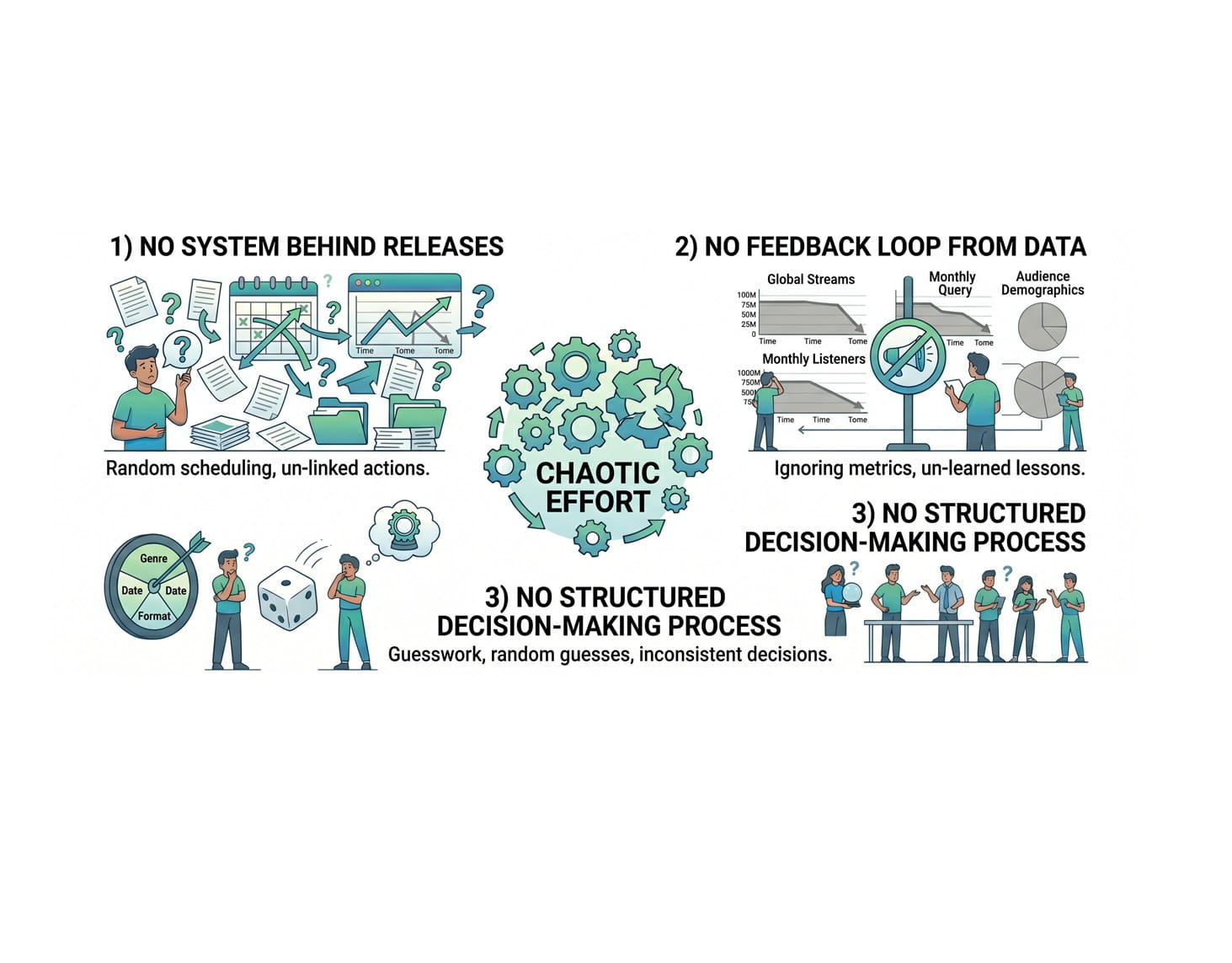
Why Most Artists Fail at Releases
- No system behind their releases
- No feedback loop from data
- No structured decision-making process
How Melboss Helps You Execute Better Releases
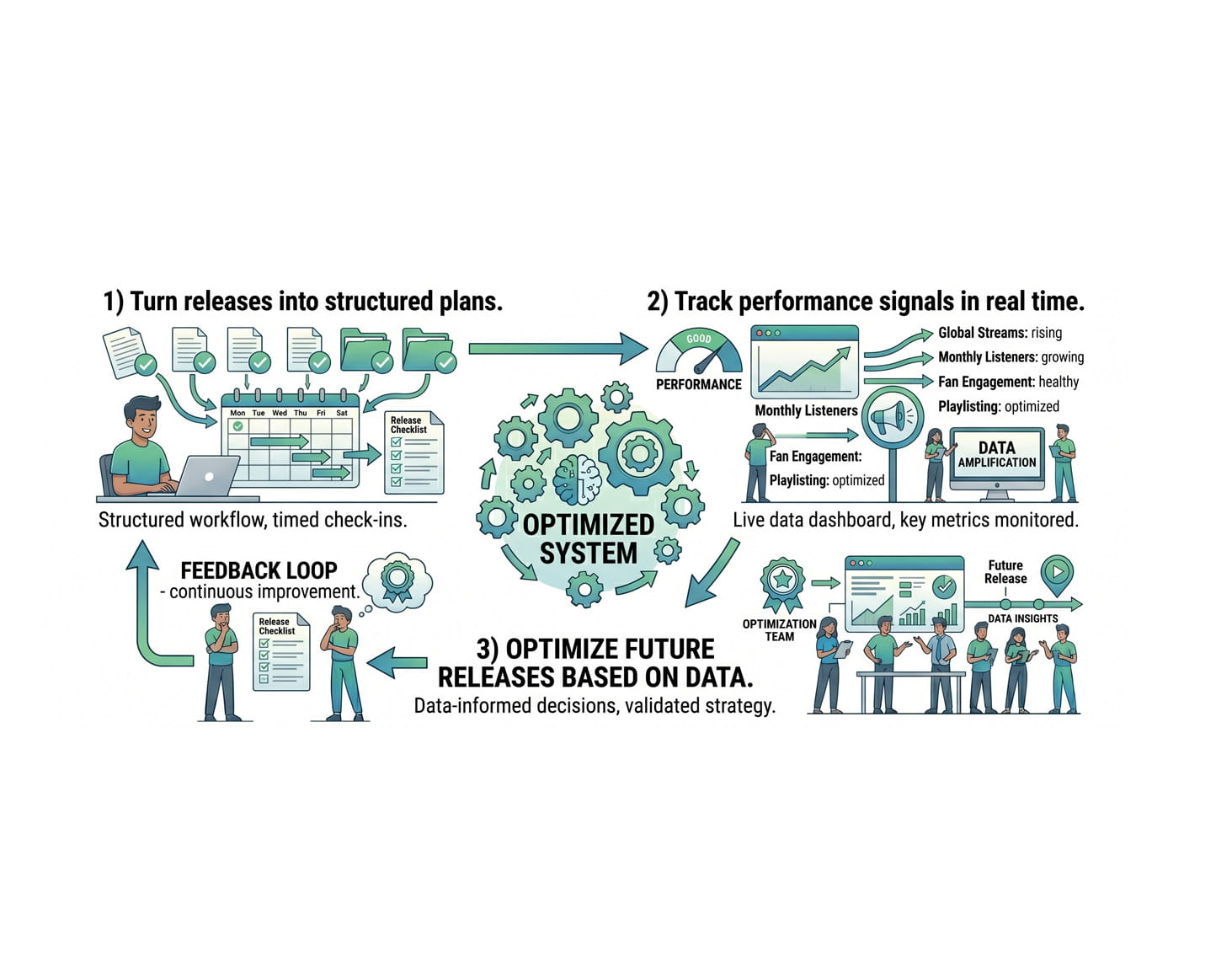
This is where tools like Melboss help artists turn releases into structured, data-driven growth systems.
- Turn releases into structured plans
- Track performance signals in real time
- Optimize future releases based on data
Related Guides
Spotify Playlist Hub
Learn how playlists amplify your release strategy and algorithmic reach.
Spotify Growth Analysis
Understand your Spotify data and turn insights into decisions.
How to Grow on Spotify
Full 2026 framework for sustainable artist growth.
What is a Spotify release strategy?
A Spotify release strategy is a structured plan that defines what you do before, during, and after releasing music to maximize growth, engagement, and algorithmic reach.
Why do most release strategies fail?
Most artists release music without preparation, ignore early performance signals, and don’t analyze data after release, which leads to inconsistent growth.
How long does it take to see results from a release strategy?
You can start seeing meaningful performance signals within the first 7–14 days after release, but consistent growth comes from repeating and improving your strategy over time.
What matters most in a Spotify release?
Early engagement signals such as saves, completion rate, and listener retention are critical, as they influence how Spotify’s algorithm distributes your music.
Do playlists guarantee success?
No. Playlists increase exposure, but real growth comes from combining strong performance signals with a structured release strategy.
How can Melboss help with my release strategy?
Melboss helps artists turn their releases into structured, data-driven plans by tracking performance, identifying opportunities, and optimizing future releases based on real insights.
Is a release plan better than releasing music randomly?
Yes. A structured release plan ensures every release has a clear goal, audience strategy, and performance tracking, while random releases make it impossible to build consistent growth over time.
What is Smart Music Manager in Melboss?
Smart Music Manager is Melboss’s AI-powered system that creates personalized release strategies, helps you organize your promotion plan, and turns your music data into clear actions to grow your audience faster.
Your Music Business, Our Trusted Clients
We work with artists, labels, managers, promoters and publishers.
Build Your Next Release Strategy with Melboss